DESIGN SHAPES HOW WE EXPERIENCE THE WORLD.


The Impact of AI on Architecture Studio Design Flow
3/9/20267 min read
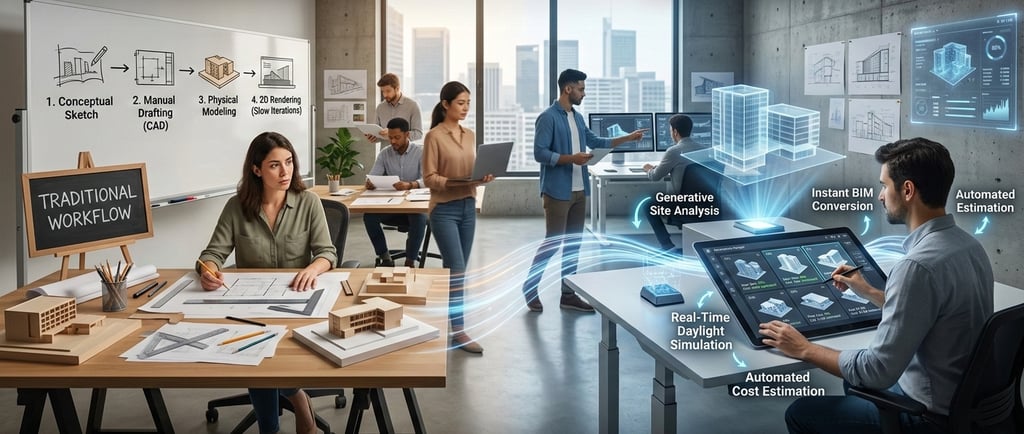

Introduction to AI in Architecture
Artificial intelligence (AI) is a transformative technology that has increasingly permeated various industries, and architecture is no exception. At its core, AI refers to the capability of a machine to imitate intelligent human behavior, allowing it to perform tasks typically requiring human intelligence such as problem-solving, learning, and adaptation. In the context of architecture, AI can manifest in several forms, with notable applications including machine learning algorithms, generative design techniques, and advanced data analysis systems.
Machine learning, a subset of AI, enables architects to analyze vast amounts of data and draw insights that inform design decisions. By examining historical data, project outcomes, and user preferences, machine learning systems can suggest optimal designs that align with client specifications or environmental considerations. Furthermore, generative design algorithms take this a step further by autonomously generating a multitude of design alternatives based on parameters set by the user, significantly enhancing creativity and innovation in architectural design.
The growing integration of AI into architectural workflows emphasizes the necessity for architects to understand and leverage this technology. AI tools aid in streamlining repetitive tasks such as drafting and modeling, allowing architects to dedicate more time to strategic decision-making and conceptual development. Moreover, AI can enhance collaboration by enabling real-time data sharing and communication among project stakeholders, ultimately contributing to more efficient and effective design processes.
In light of these advancements, recognizing AI's role in architecture is not just a trend but a pivotal aspect of modern architectural practice. As the field evolves, embracing AI will likely redefine how designs are conceived and realized, ushering in a new era of architectural innovation that reflects both advanced technology and aesthetic consideration.
Streamlining Design Processes with AI
The integration of artificial intelligence (AI) into architectural studio design flow has revolutionized the efficiency of the design process. By employing AI tools, architects can enhance various phases, from the initial brainstorming stages to the final presentations of their concepts. One significant advantage of using AI lies in its ability to perform data analysis swiftly and accurately, allowing designers to utilize insights in their decision-making.
AI can efficiently analyze data related to building materials, environmental impacts, and even client preferences. This data-driven approach enables architects to create designs that are not only innovative but also sustainable and tailored to meet client needs. For instance, AI has been implemented in firms such as Zaha Hadid Architects, where the software efficiently evaluates design options based on parameters set by the architects. This allows teams to focus their creative energies on high-level design decisions rather than becoming bogged down in data collection and analysis.
Furthermore, project management tasks can be streamlined through AI integration. Traditional project management often involves meticulous tracking of timelines, resources, and costs, a process susceptible to human error. AI-driven project management tools can automate these processes, offering real-time updates and predictive analytics that help teams stay on track and within budget. By reducing the chances of oversights, studios can enhance their operational efficiency and allocate more resources toward innovative design solutions.
Moreover, AI aids in automating repetitive tasks that may otherwise consume significant time and energy. By leveraging machine learning and algorithmic design tools, architects can quickly generate multiple design iterations based on given parameters. This capability not only accelerates the design process but also empowers architects to explore a broader range of creative possibilities, leading to more refined and diverse outcomes.
In summary, the incorporation of AI tools in architecture facilitates a streamlined design process by enhancing data analysis, improving project management, and automating repetitive tasks. As architectural practices continue to evolve, the successful integration of AI will likely become a standard aspect of design workflows, ultimately transforming the way architects create and innovate.
Enhancing Creativity and Innovation through AI
The integration of artificial intelligence in architecture design not only streamlines processes but also significantly enriches the creative aspect of studio projects. By leveraging advanced computational algorithms, AI can act as a dynamic partner in the architectural design flow, enabling architects to transcend conventional boundaries. One of the primary advantages of incorporating AI into the design methodology is its ability to generate a variety of concepts that human designers may not have contemplated independently.
The generative design technology, powered by AI, allows architects to input specific parameters such as material constraints, sustainability goals, and aesthetic considerations. The AI system then analyzes these parameters using vast databases of existing architectural models, producing a multitude of innovative designs that meet the outlined criteria. This not only accelerates the ideation process but also ensures that architects explore a diverse range of solutions that potentially enhance the overall project quality.
Furthermore, AI's analytical capabilities enable architects to receive real-time feedback and suggestions, making it easier to iterate on design variations. This collaborative approach can lead to exciting breakthroughs, where architects feel empowered to experiment with novel forms and structures without the immediate fear of failure. Beyond merely generating designs, AI tools can help visualize complex spatial relationships and simulate environmental impacts, fostering a more informed and creative decision-making process.
The symbiotic relationship between human creativity and AI’s computational prowess fosters an environment rich in innovation. As architects become more adept at utilizing these tools, the potential for groundbreaking architectural designs expands exponentially. This transformative capacity of AI not only enhances the quality of individual projects but also catalyzes a shift in the architectural paradigm, encouraging a culture of experimentation and exploration.
Collaboration and Communication in the AI Era
In the architecture industry, the integration of artificial intelligence (AI) tools has significantly transformed collaboration and communication practices within studios and with clients. These tools provide various functionalities that streamline processes, enabling teams to work more efficiently and effectively. One of the most impactful features of AI in architecture is its capacity for promoting real-time feedback throughout the design process. AI-driven platforms allow architects and designers to share digital models instantly, ensuring that all stakeholders can access the most current design iterations. This immediacy not only saves time but also enhances decision-making, as teams can quickly adapt and respond to feedback.
Furthermore, AI tools facilitate the sharing of design concepts through intuitive interfaces that make it easy for both technical and non-technical team members, as well as clients, to engage with complex data and design visualizations. Such democratization of information is vital in enhancing communication, as it bridges gaps between different expertise and fostering a culture of collaboration. The ability to visualize concepts using AI-generated renderings or simulations creates a common language that can lead to more productive dialogues and clearer expectations.
Moreover, the benefits of AI in architecture are maximized when interdisciplinary collaboration is embraced. Integrating insights from various fields such as urban planning, engineering, and sustainable design can inform architectural practices and improve outcomes substantially. AI can analyze vast datasets, offering predictions and identifying trends that may not be evident to human collaborators alone. By leveraging AI's analytical capabilities alongside the expertise of diverse professionals, architecture studios can refine their design flow, produce innovative solutions, and ultimately enhance the quality of the built environment.
Challenges and Limitations of AI in Architecture
The integration of artificial intelligence (AI) into architecture presents a multitude of challenges and limitations that must be critically examined. One significant concern is job displacement; as AI systems become capable of performing tasks traditionally executed by human architects, there is a growing apprehension regarding the future role of professionals in the field. While AI can enhance efficiency in design processes, it may also lead to reduced job opportunities for architects, particularly in areas where repetitive tasks are prevalent.
Moreover, the ethical implications of using AI in architectural design cannot be overlooked. The reliance on algorithms raises questions about accountability and decision-making. In instances where AI-driven designs fail to meet client expectations or result in unforeseen consequences, determining responsibility can be complex. It is essential for architects to ensure that ethical considerations remain at the forefront of their design practices.
Data privacy is another critical challenge associated with incorporating AI into architecture. Given that AI systems often require extensive datasets to operate effectively, safeguarding the privacy of sensitive information becomes paramount. Architects must navigate the delicate balance between leveraging data for innovative design and protecting individual privacy rights, especially in urban environments where data collection is pervasive.
Furthermore, the necessity for human oversight in AI-driven designs is a key limitation. While AI can process and analyze vast amounts of information, it lacks the inherent creativity, intuition, and contextual awareness that human architects possess. The design of architectural spaces demands not only technical expertise but also an understanding of cultural and social dynamics, which AI cannot replicate. Consequently, a harmonious balance between advanced technology and human intuition is vital to ensure the success of architectural projects.
Future Trends: The Evolving Role of AI in Architecture
As the field of architecture continues to evolve, the integration of artificial intelligence (AI) will play a significant role in shaping future design processes. Emerging technologies are rapidly transforming architectural practices, offering new tools and methodologies that enhance studio workflows. One prominent trend is the advancement of generative design, where AI algorithms can analyze vast amounts of data and produce multiple design options based on specific criteria set by architects. This capability allows professionals to explore innovative solutions that may not have been considered through traditional design methods.
Additionally, improvements in machine learning and computational design enable architects to simulate real-world scenarios more effectively. For instance, AI can predict how different materials will respond to environmental conditions or how space utilization can be optimized. This foresight not only increases efficiency but also fosters sustainable architectural practices. As these AI technologies become more sophisticated, they will further solidify their place as essential components in the architectural design toolkit.
Architects must also prepare for the increasing role of AI by developing a deeper understanding of these advanced tools. Continuous education and adaptation will be crucial in helping professionals keep pace with the evolving landscape. Collaborations between architects and AI specialists could lead to groundbreaking innovations that redefine project scopes. Furthermore, ongoing research at universities and tech companies focusing on AI in architecture is instrumental in exploring these new possibilities. By embracing these changes, architects can ensure they remain competitive and effective in a future where AI significantly impacts architectural design.
Conclusion: Embracing AI for a Sustainable Future in Architecture
The integration of artificial intelligence (AI) into architecture is transforming the design flow significantly. By enhancing design quality, optimizing workflows, and fostering innovation, AI tools are paving the way for a more efficient architectural practice. Architects who incorporate these advanced technologies are not just improving the aesthetics or functionality of their projects but also increasing their productivity and competitiveness in the industry.
Through advanced algorithms and machine learning techniques, AI is empowering architects to make informed design decisions backed by data analysis and predictive modeling. This capability leads to designs that are more aligned with client needs and environmental considerations. As sustainability and efficiency become top priorities for modern architecture, architects leveraging AI can address these concerns better and contribute to building a more sustainable future.
However, embracing AI is not without its challenges. It calls for architects to be proactive in adapting to new technologies and continuously upskilling to remain relevant. Additionally, a responsible approach to using AI in architectural design must be prioritized to ensure ethical standards are met. This includes maintaining transparency, accountability, and considering the social implications of AI decisions.
In conclusion, the impact of AI on architecture is profound, offering paths toward enhanced design and innovative solutions. As the industry progresses, it is imperative for architects to embrace these tools, ensuring they contribute to a sustainable and ethical architectural practice. By doing so, they can shape the built environment in ways that benefit both society and the planet.
Begin a Design Inquiry.
Transforming ideas into breathtaking architectural realities.
contact:
Start an Inquiry:
© 2024. Sama Karim Design Studios. All Rights Reserved.