

Home > Luxima Design Studio > Project
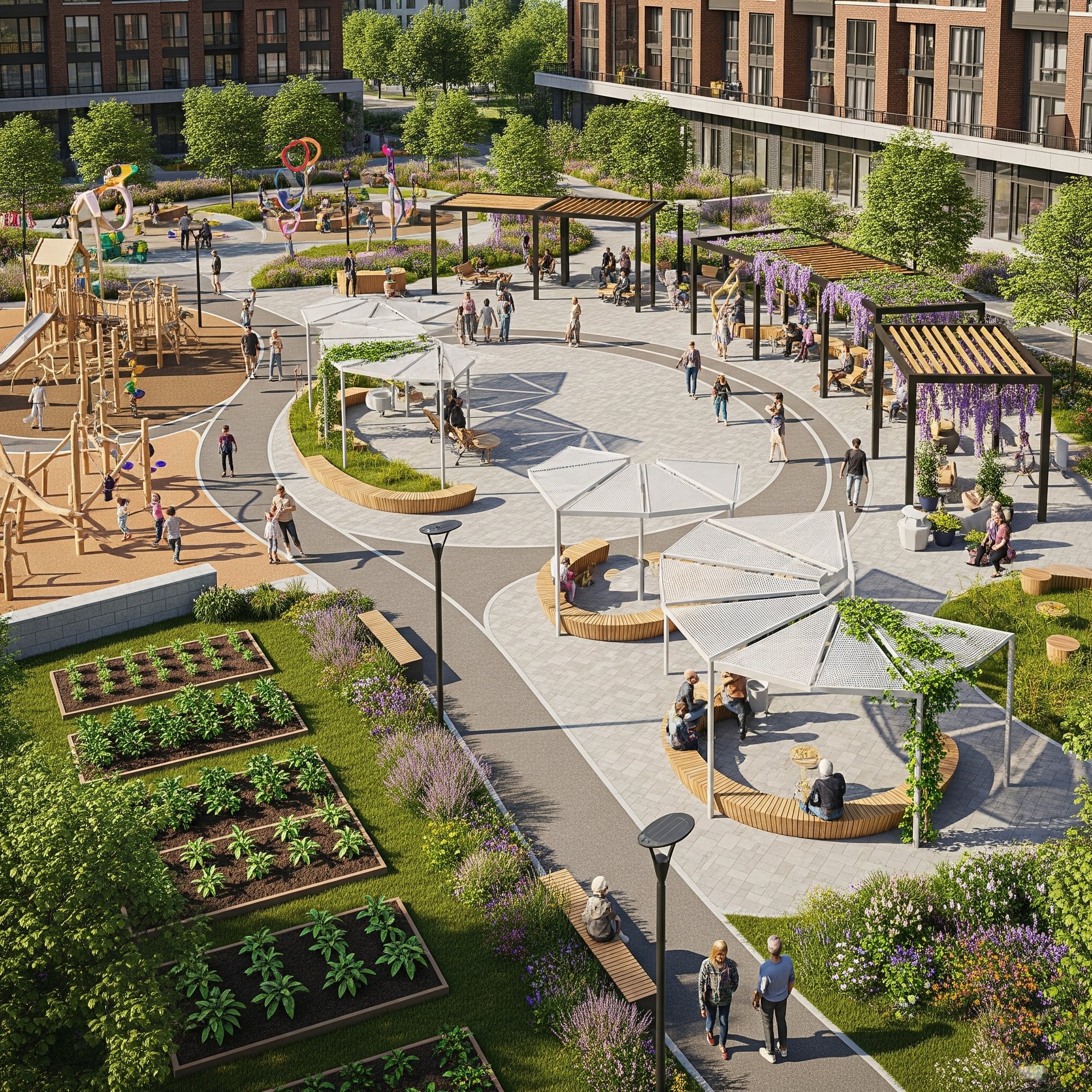
A public realm toolkit for turning transit edges, intersections, and civic spaces into more comfortable, walkable, and socially active urban places.
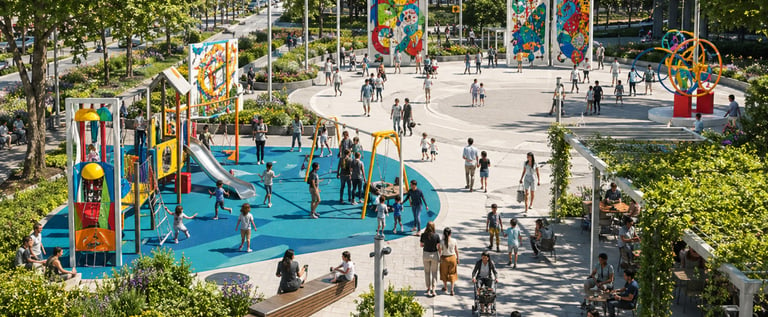
Urban Public Realm Study | Toronto Mobility & Civic Spaces
Antibes Community Node
Esther Shiner Park Edge + Transit Access Zone
Location: Toronto
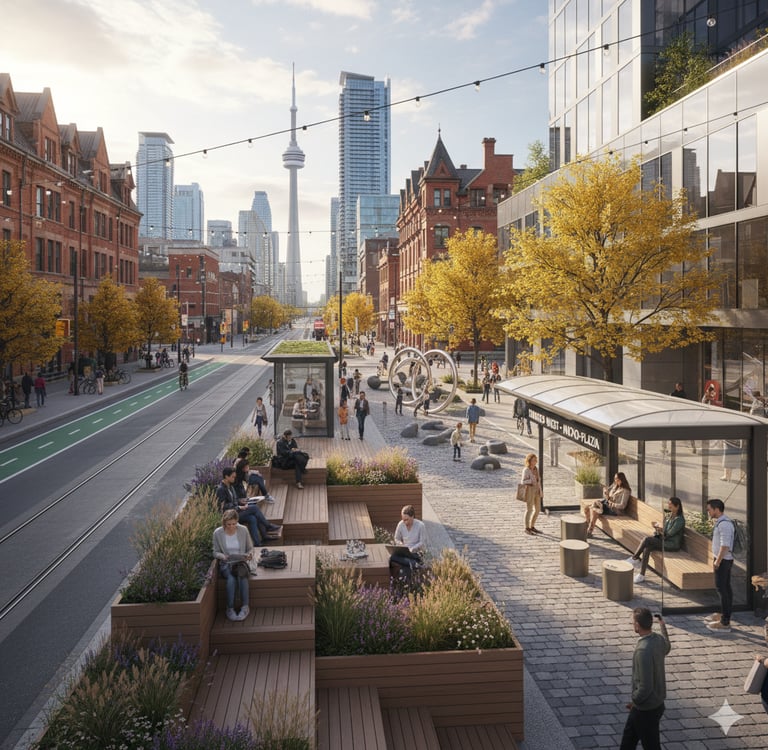
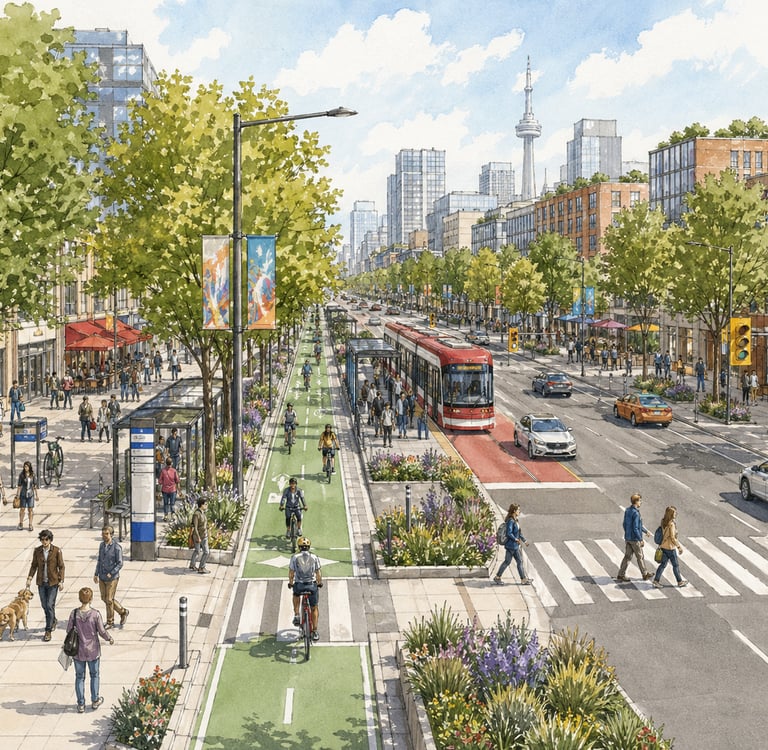
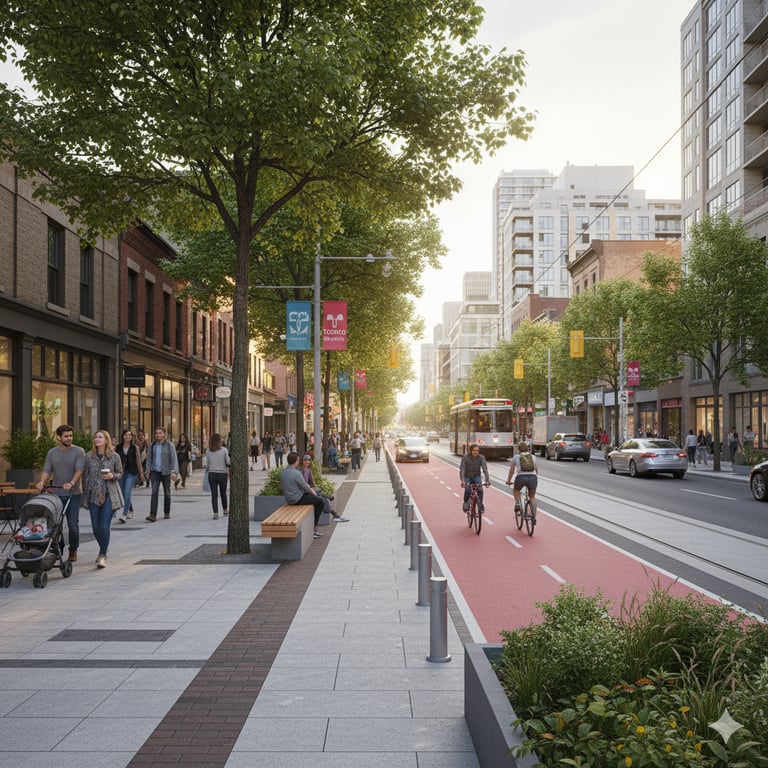
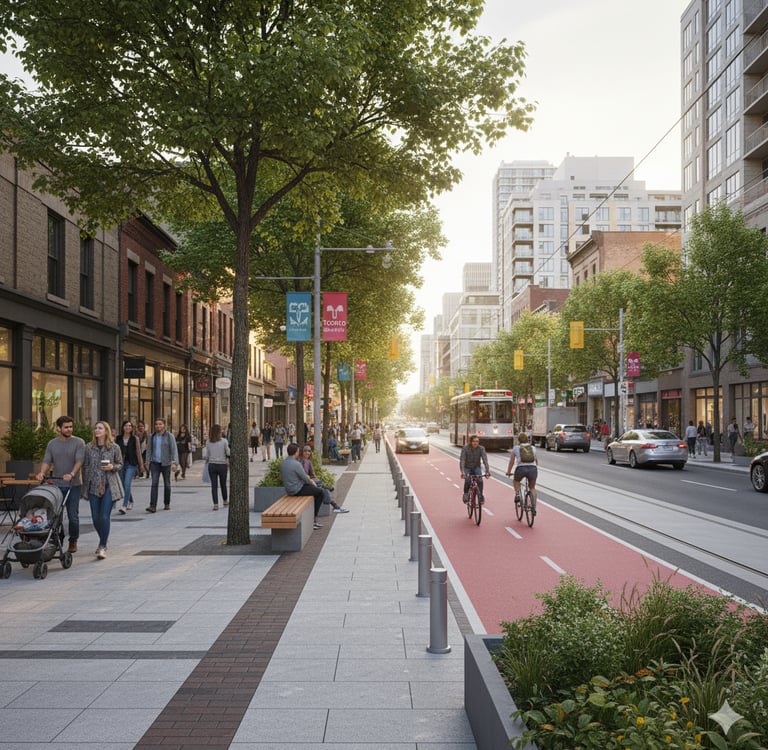
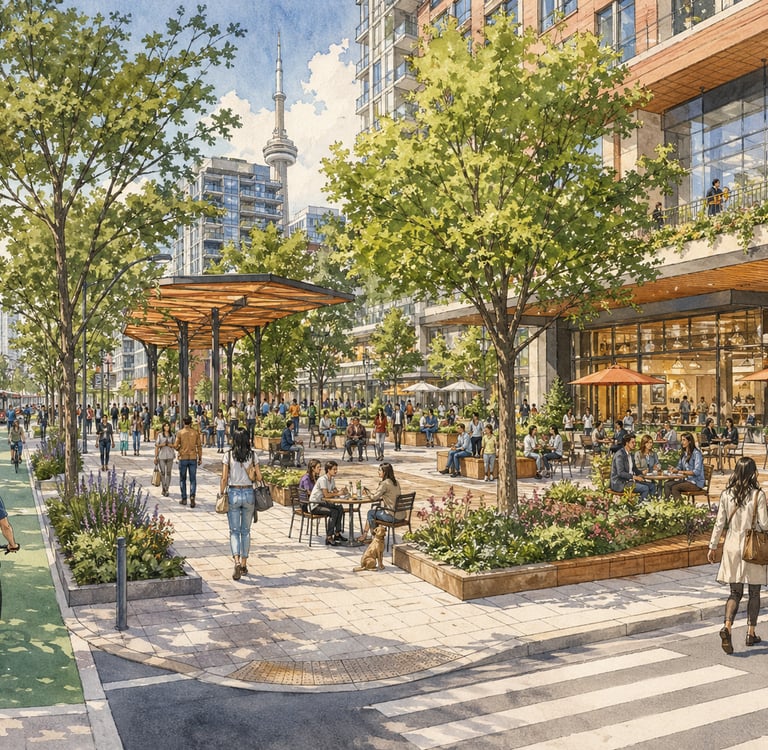
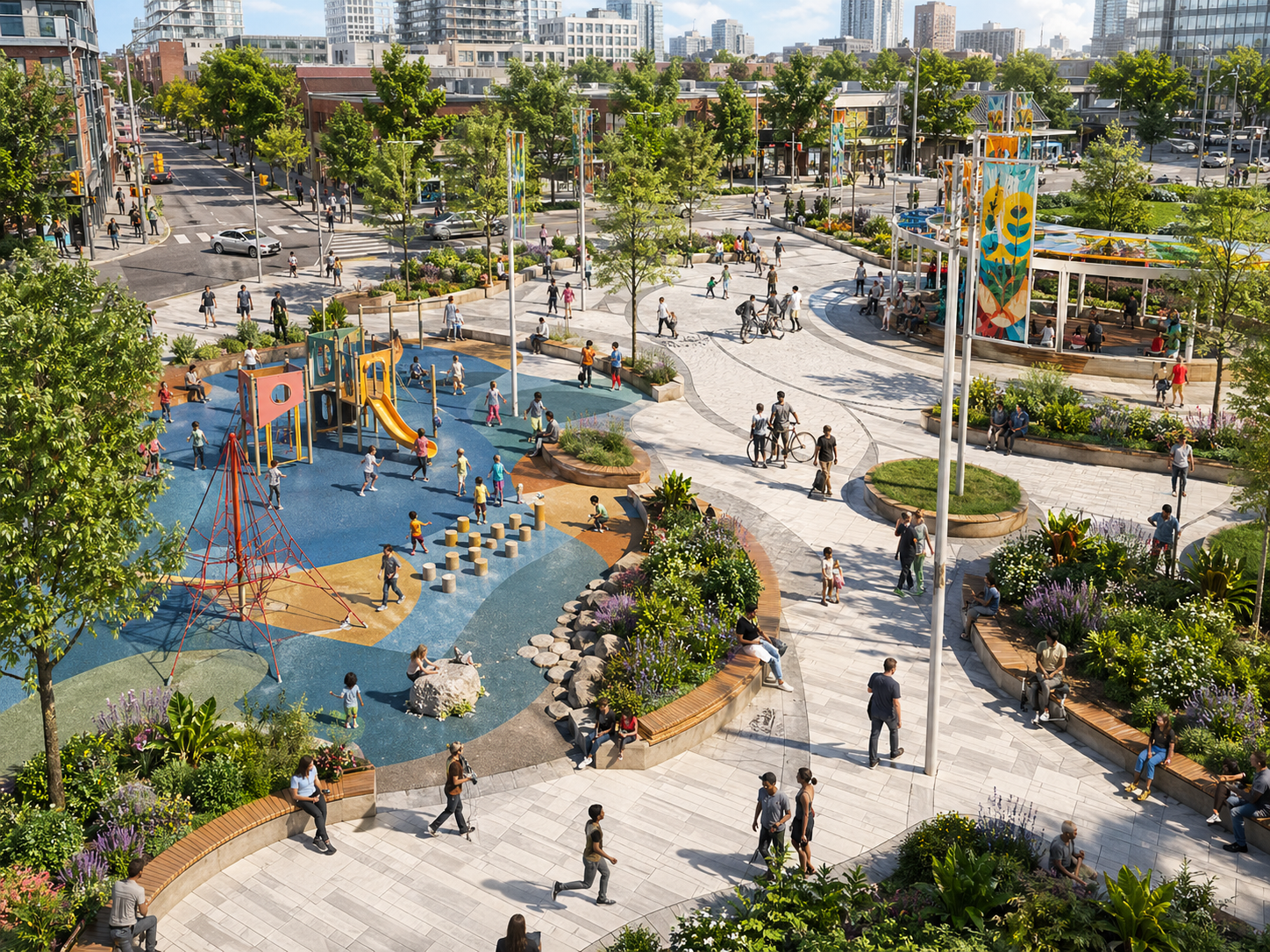
This study brings together a series of public realm ideas for Toronto’s growing urban centres, with a focus on North York, Willowdale, and the Yonge Street corridor. Rather than treating each site as an isolated design problem, the study explores how a consistent public realm language can connect different types of spaces: civic squares, transit entrances, sidewalks, intersections, retail frontages, and mobility hubs.
The goal is to create public spaces that are not only functional, but also welcoming, recognizable, and active throughout the day and across different seasons.
Design Intent
The study focuses on a simple question:
How can everyday urban spaces become more comfortable, useful, and memorable?
Toronto has many busy public edges where people move quickly between transit, work, home, shops, and community destinations. Many of these spaces are practical but not comfortable. They often lack shade, seating, planting, visual identity, and places to pause.
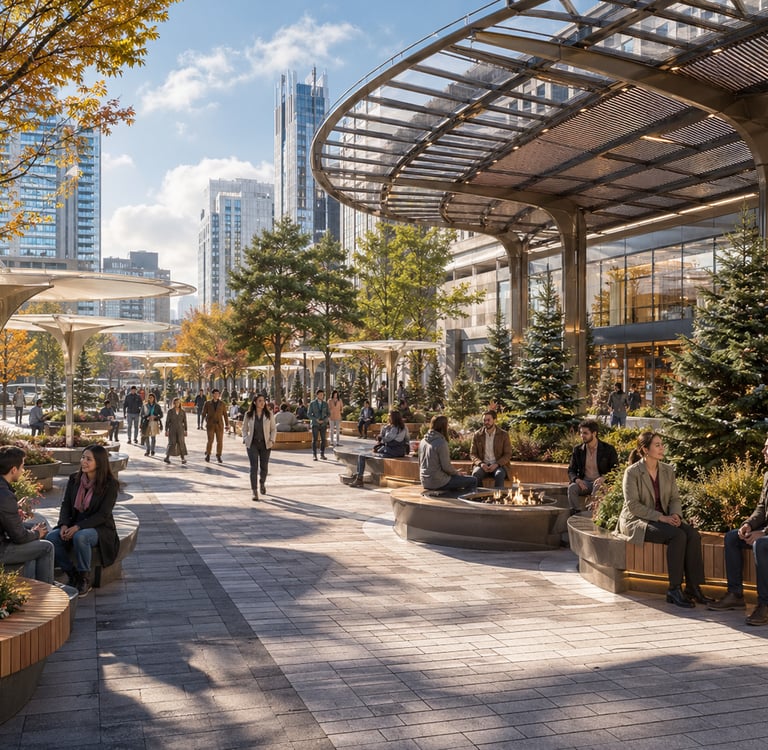
This public realm study proposes a design-led approach that combines mobility, landscape, seating, lighting, wayfinding, and civic identity into one coordinated system
Public Realm Strategy
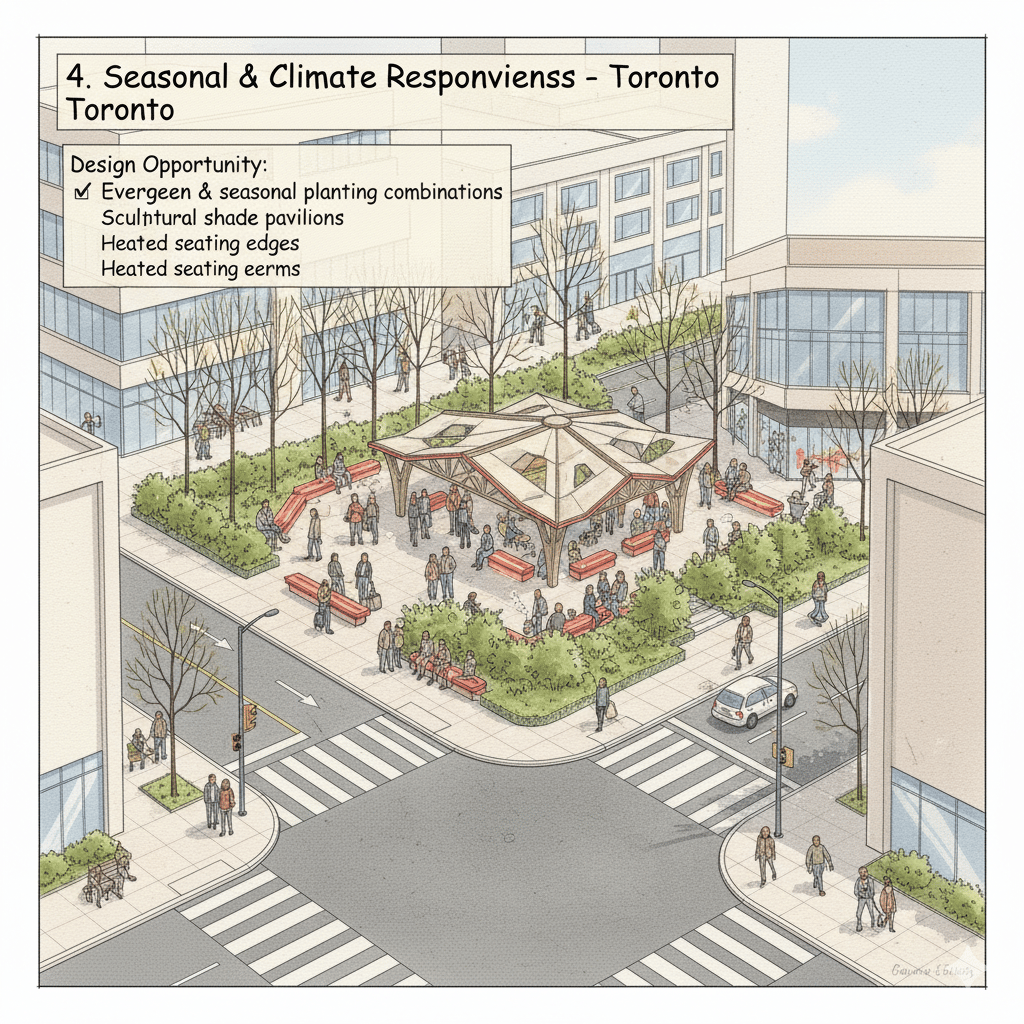
1. Shade + Weather Protection
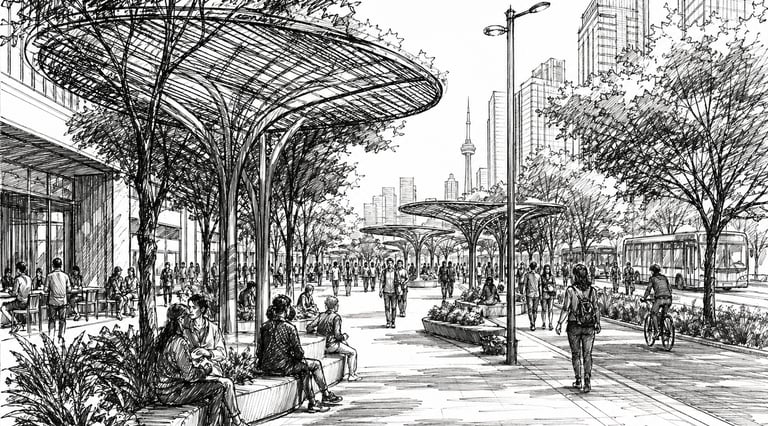
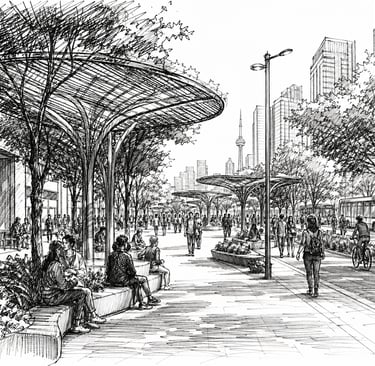
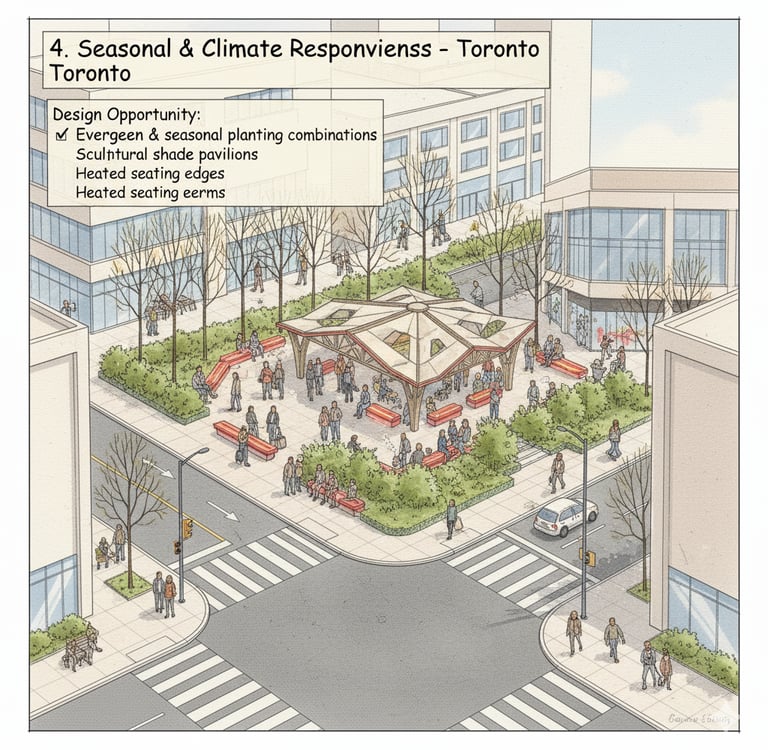
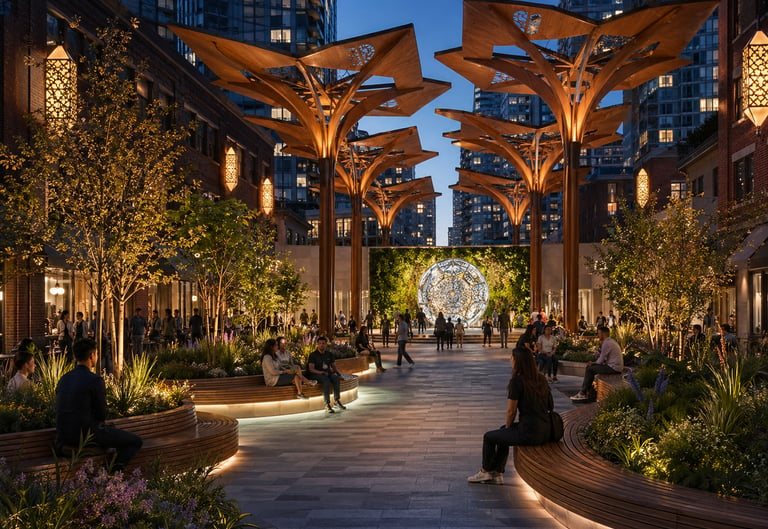
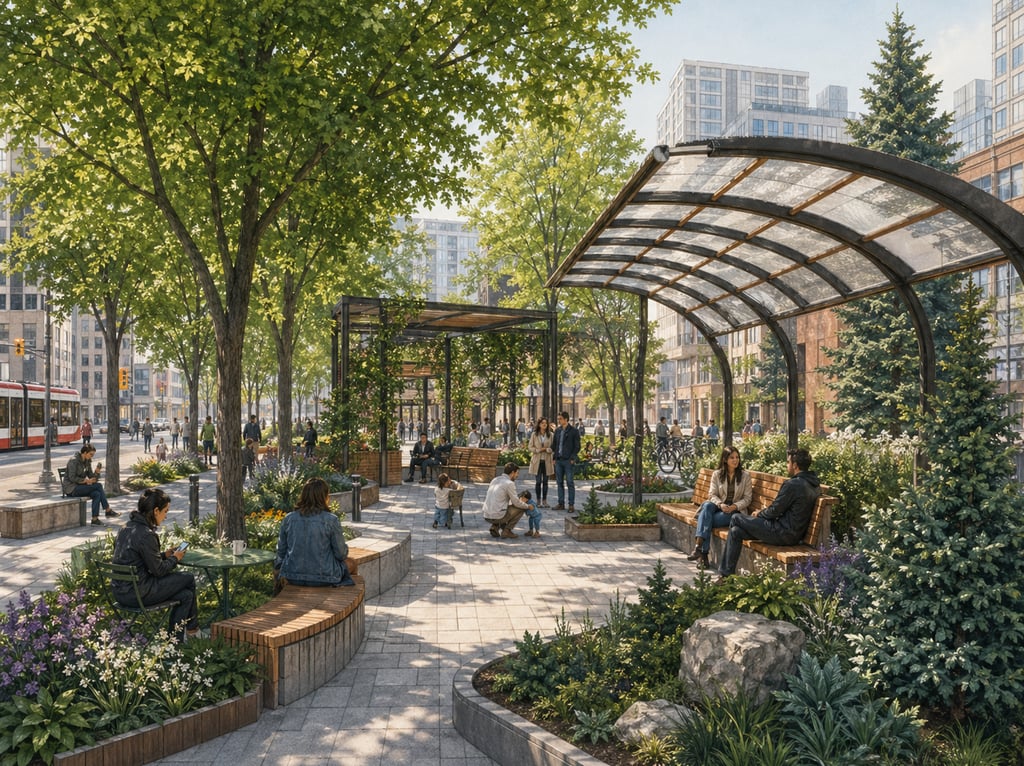
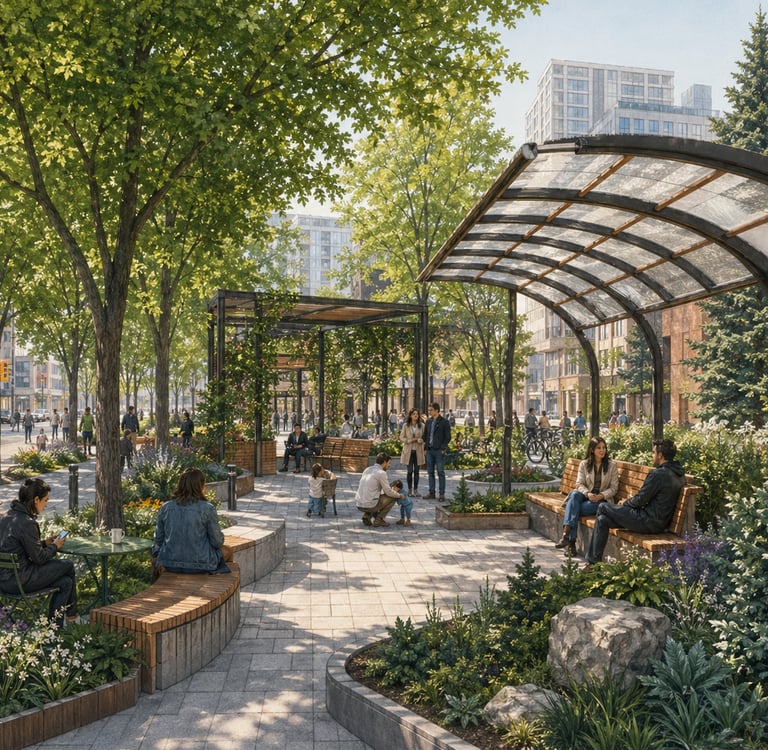
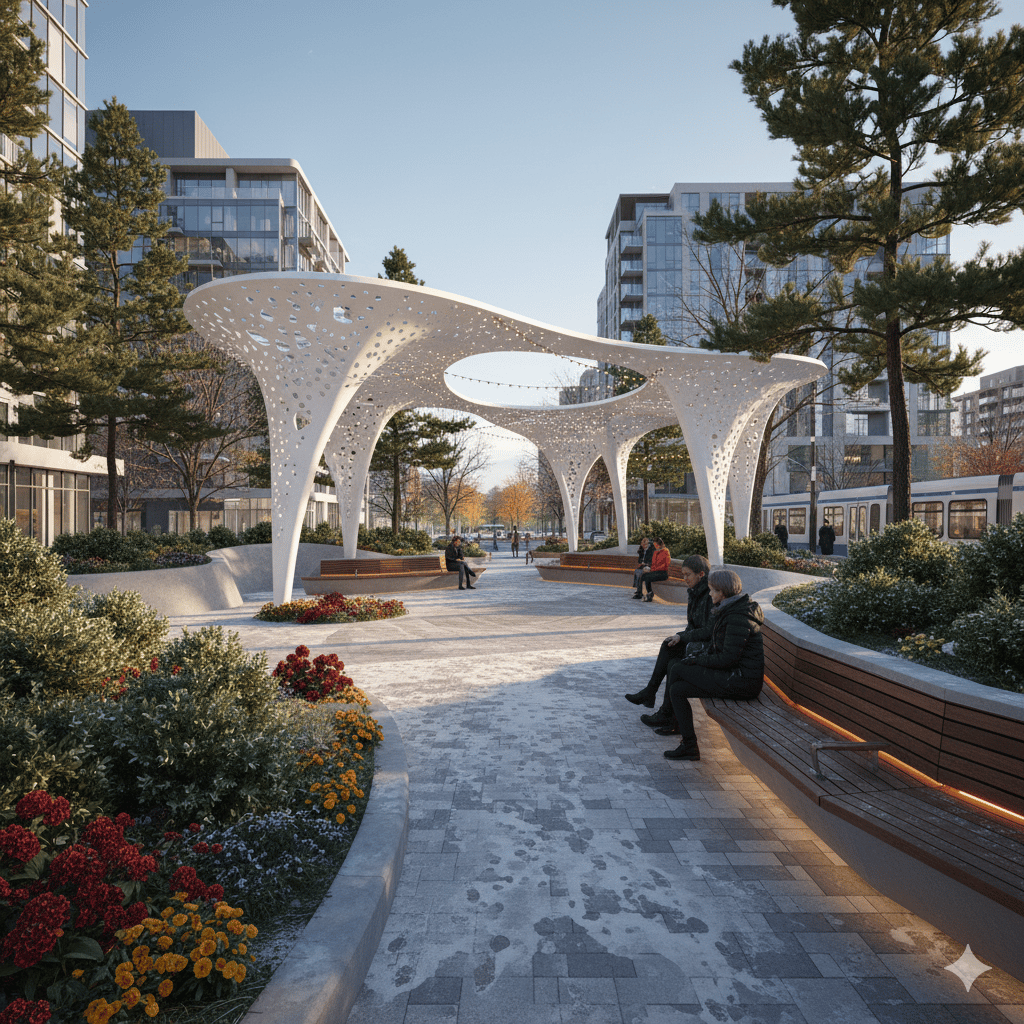
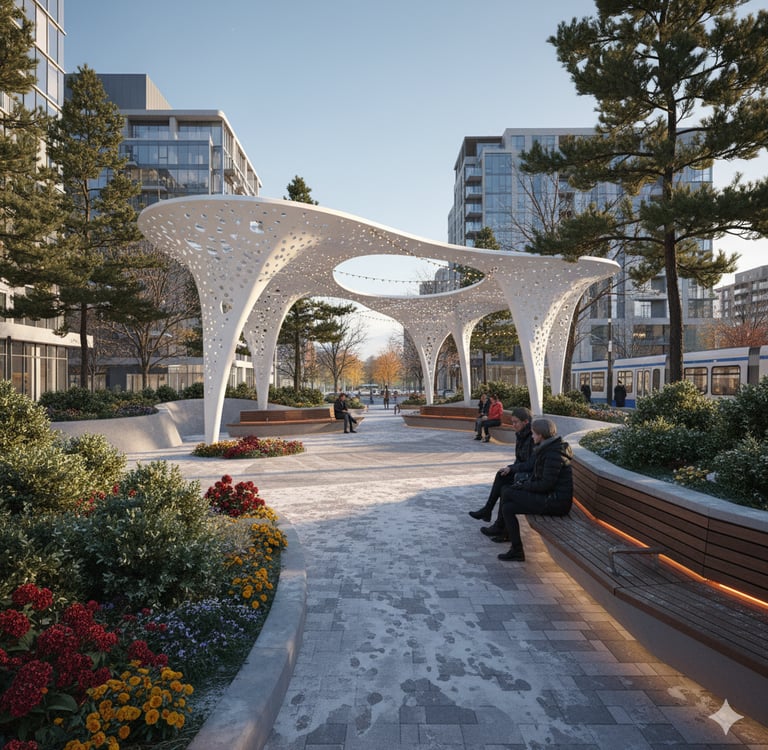
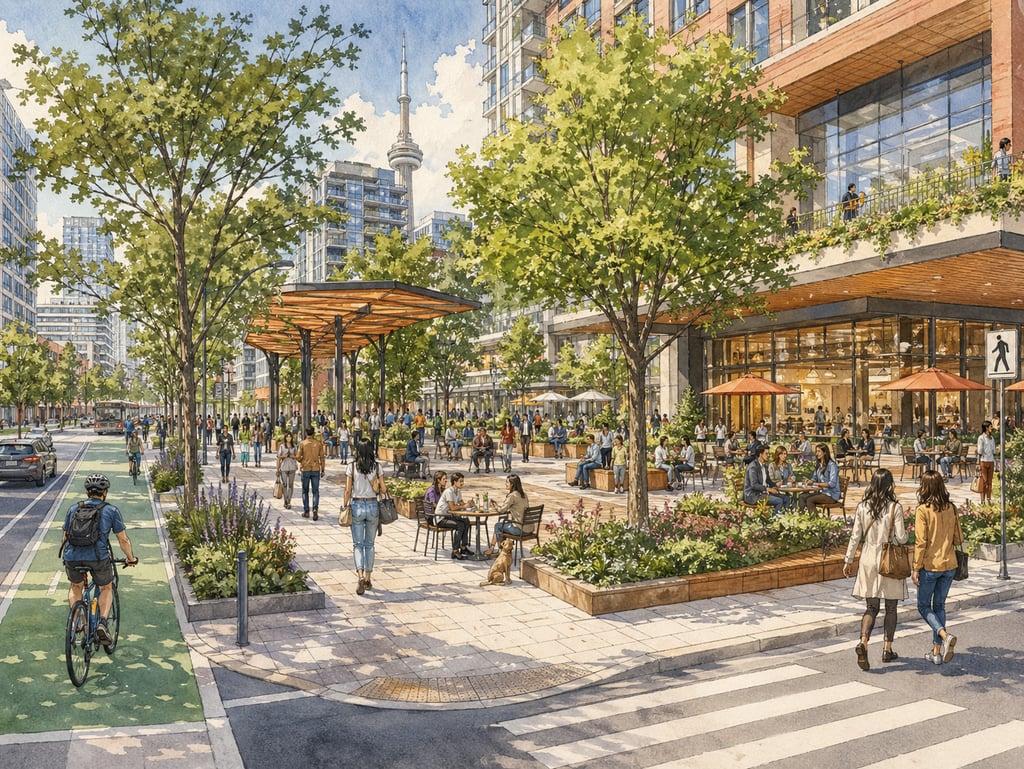
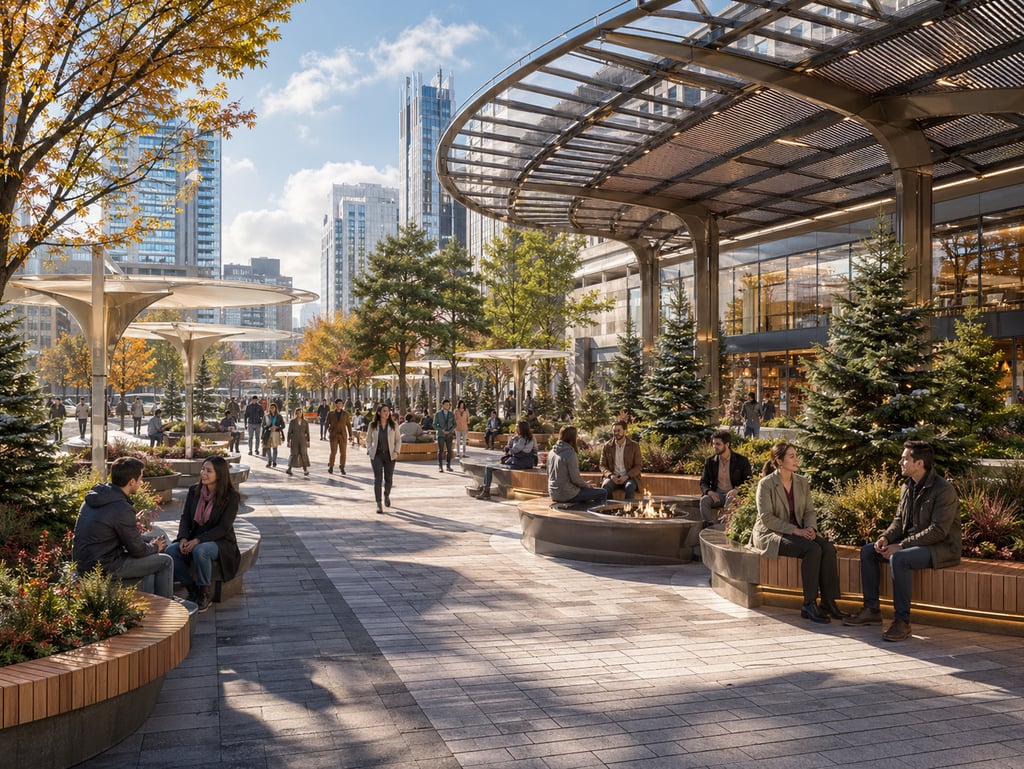
Human-scaled canopy structures provide shade in summer and protection from rain and snow in colder months. These elements also create a recognizable design language across different sites.
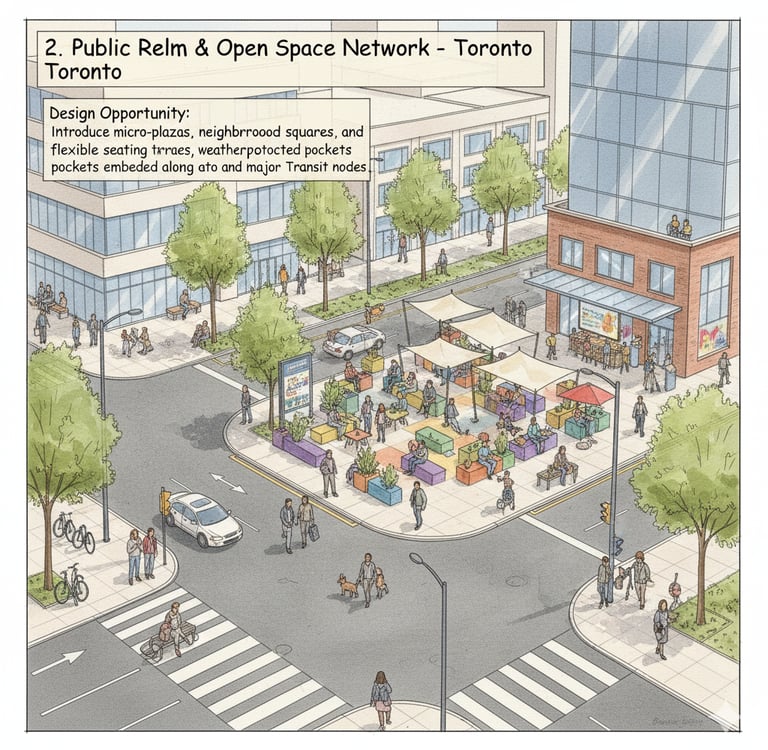
2. Seating + Landscape Rooms
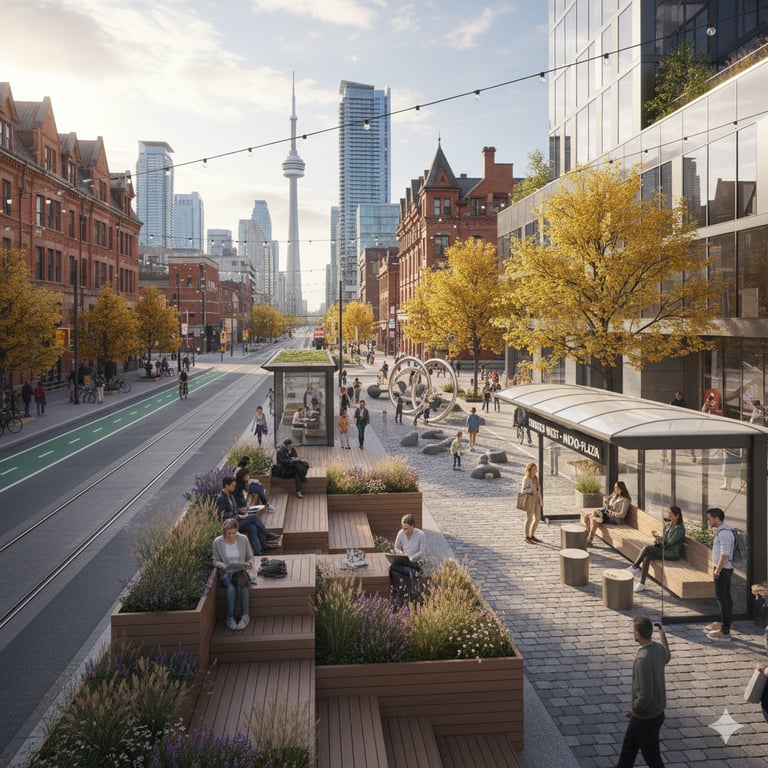
Integrated benches, planters, and planting beds create small social spaces where people can sit, wait, meet, eat, read, or rest.
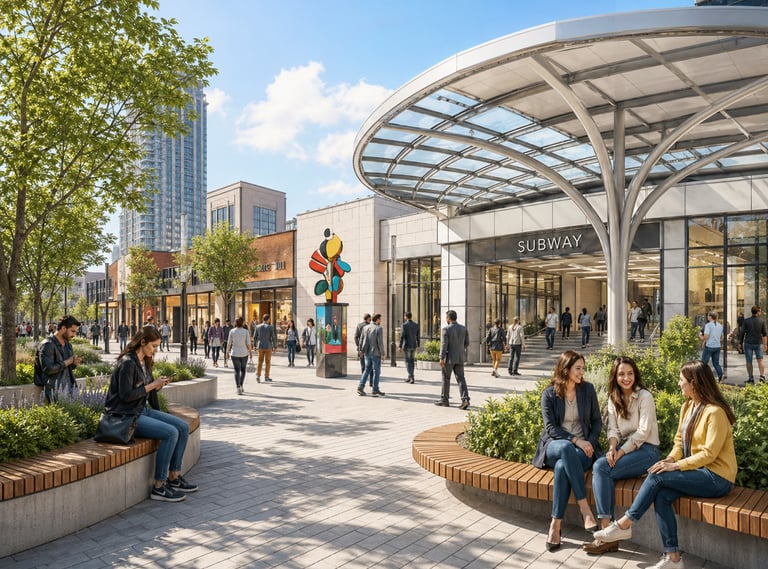
3. Mobility + First-Last-Mile Support
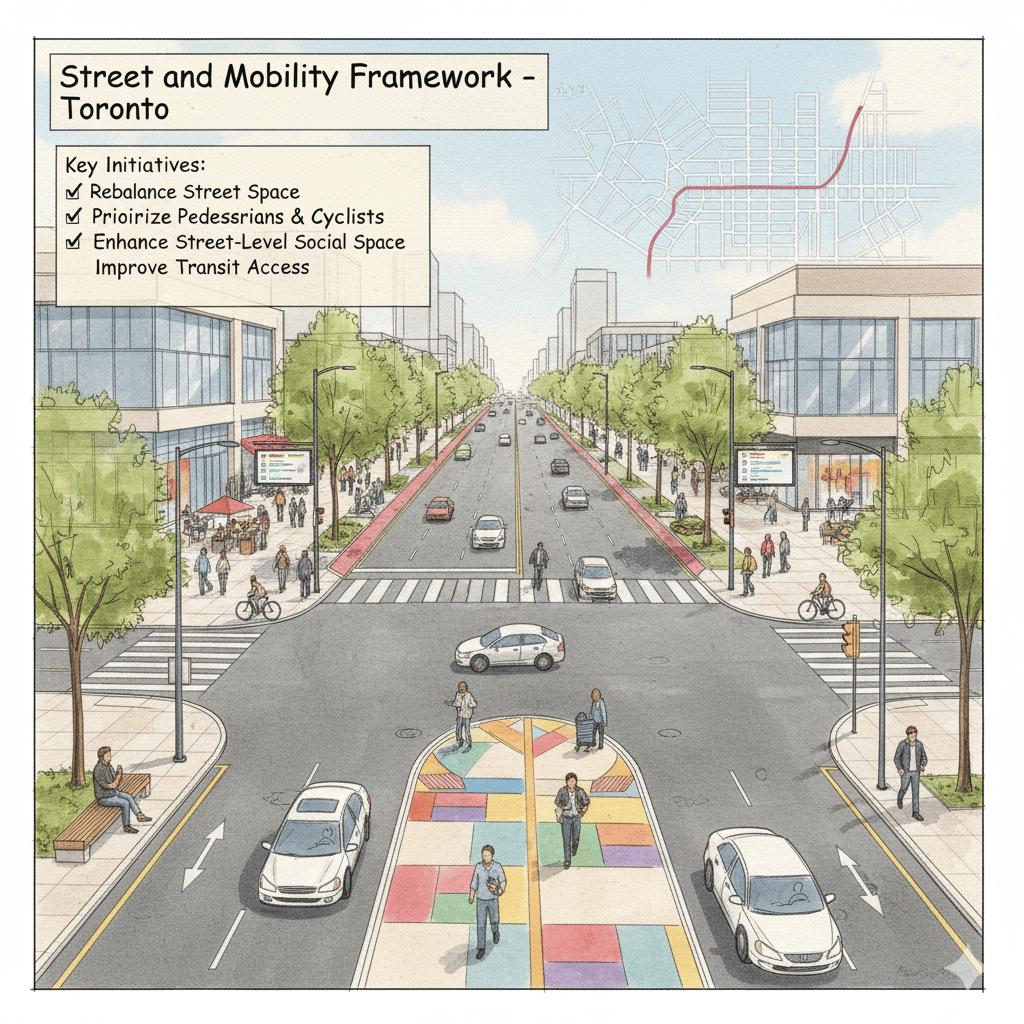
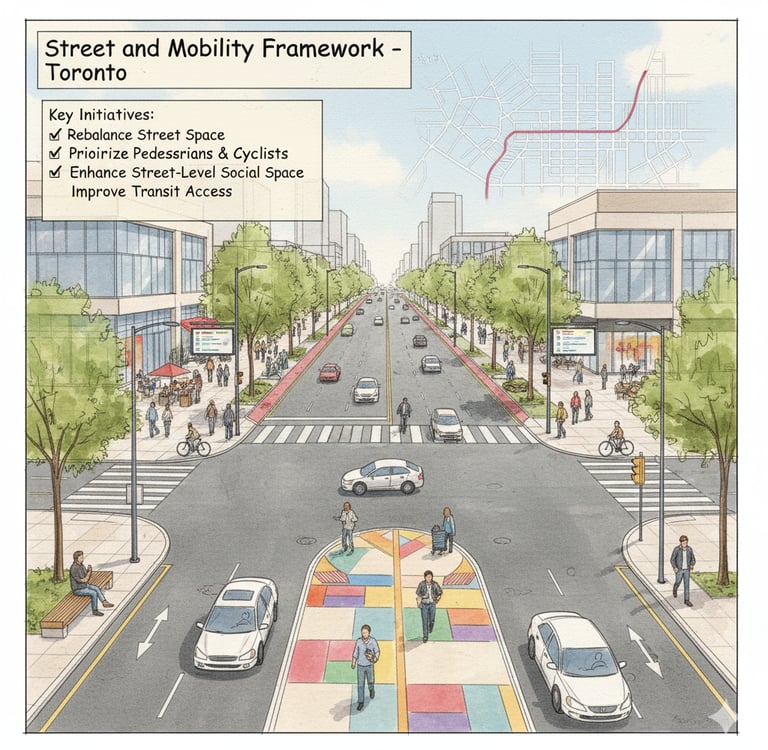
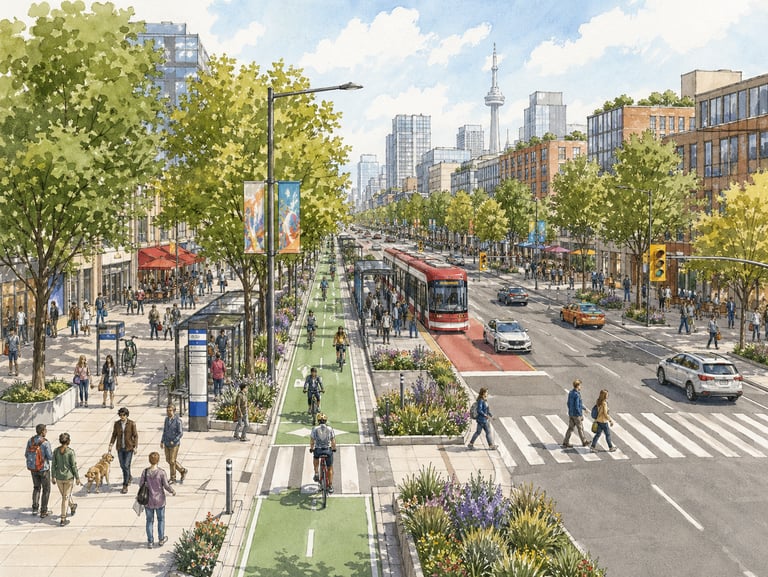
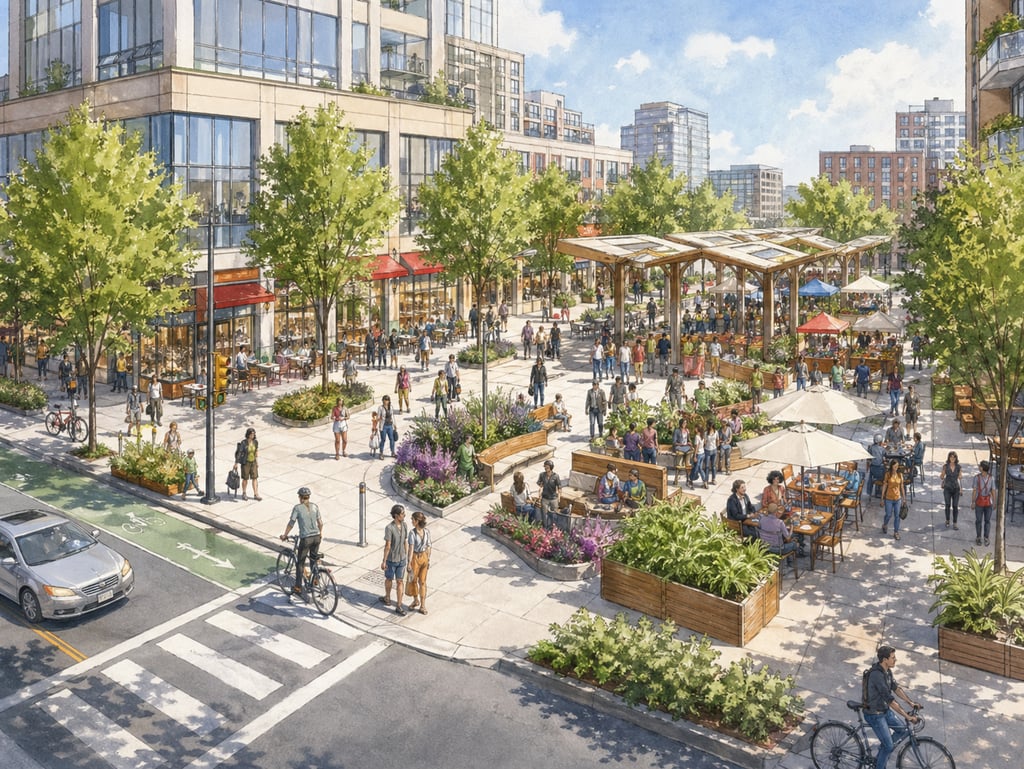
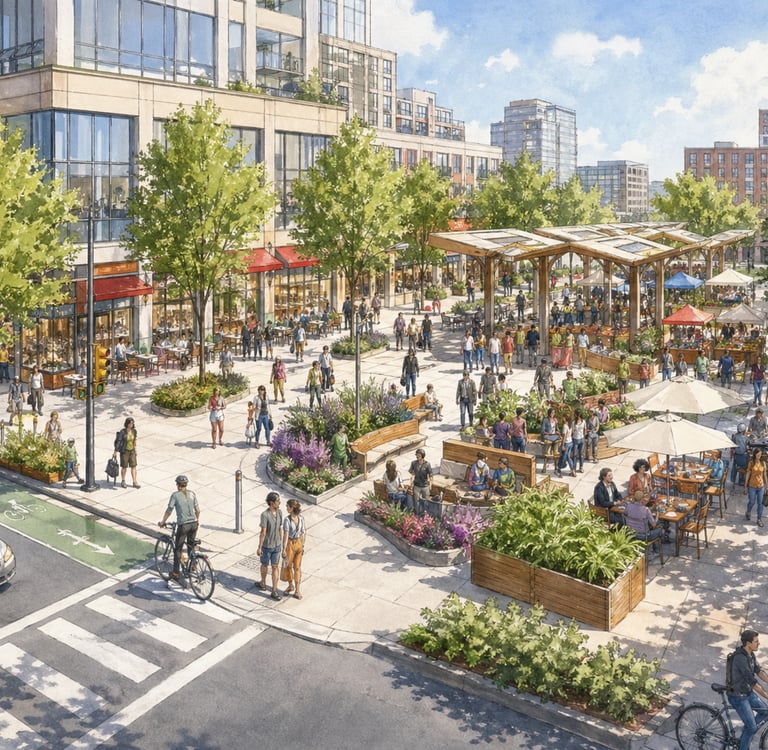
Transit entrances, bus stops, bike parking, scooter zones, and pedestrian paths are organized into clearer mobility nodes that support daily movement without cluttering the sidewalk.
4. Clearer Pedestrian Flow
Paving, planting, lighting, and spatial edges help guide people through busy areas while keeping sidewalks open, accessible, and easy to understand.
5. Seasonal + Flexible Programming
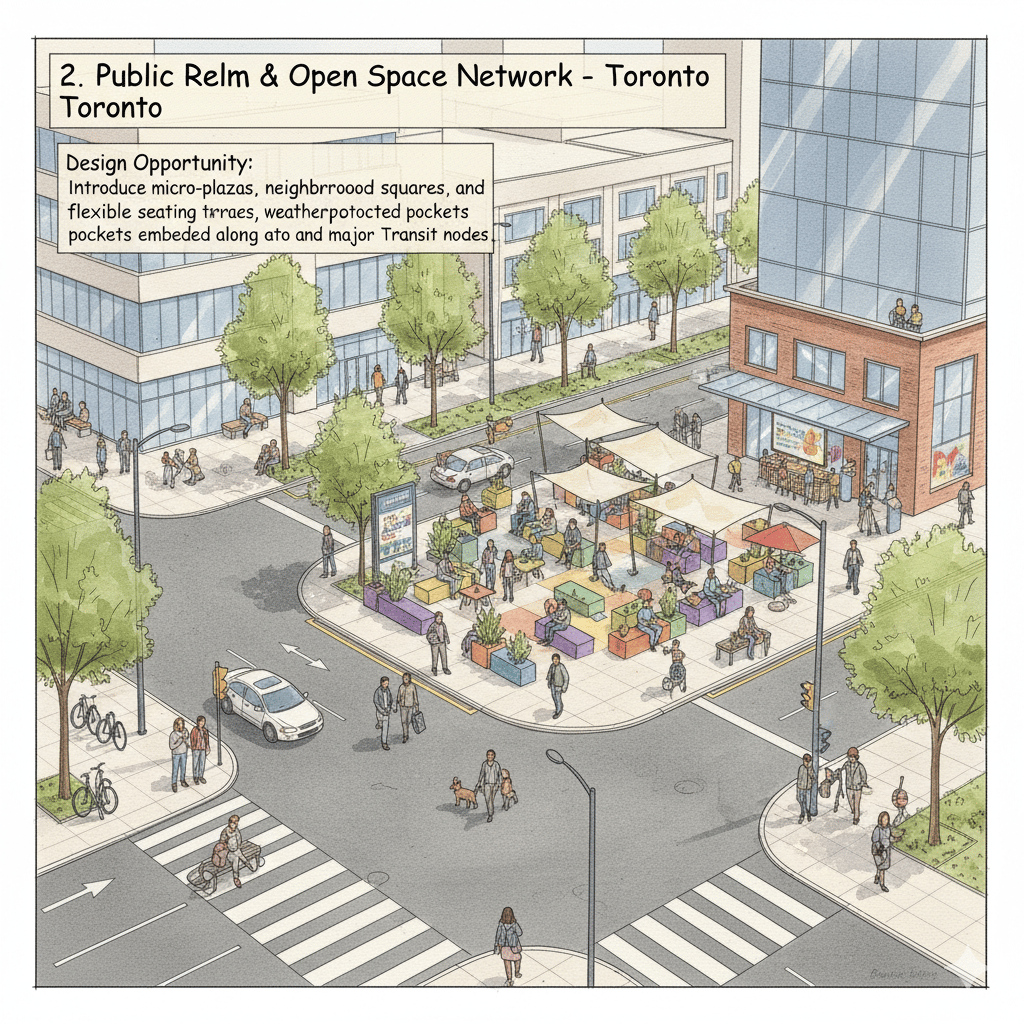
Public spaces can support pop-ups, small markets, art displays, cultural events, outdoor seating, movie nights, winter activities, and community information points.
6. Civic Identity + Visual Continuity
A consistent family of materials, canopies, lighting, furniture, and planting can help create a stronger identity for North York’s public realm while still allowing each site to feel unique.
Key Design Elements
Canopy Families
A range of shade and shelter structures designed for different conditions: transit waiting, street seating, civic gathering, markets, and pedestrian promenades.
Integrated Seating Systems
Benches combined with planting, lighting, and durable materials for everyday comfort.
Planting Buffers
Trees, grasses, perennials, and low planting to soften traffic edges and improve microclimate.
Mobility Markers
Wayfinding, bike parking, scooter parking, and clear connections between transit, retail, and public space.
Flexible Civic Surfaces
Open paved areas that can support events, pop-ups, art installations, and temporary programming.
Lighting + Evening Use
Warm pedestrian-scale lighting to improve safety, visibility, and atmosphere after dark.
Community Value
This study supports:
More comfortable and walkable public spaces
Better connections between transit, retail, parks, and civic destinations
More shade, seating, planting, and everyday usability
Stronger identity for North York and Toronto’s urban centres
Flexible spaces for community events and seasonal programming
Safer and clearer pedestrian movement
Better support for commuters, residents, seniors, families, students, and visitors
Why This Matters
As Toronto continues to grow, public space needs to do more than fill the gaps between buildings and roads. It needs to support daily life.
Well-designed public realm can help reduce the harshness of busy corridors, improve the transit experience, support local businesses, encourage walking, and create places where people feel comfortable spending time.
This study presents a flexible design approach for transforming everyday urban infrastructure into civic spaces with stronger identity, comfort, and long-term public value.
Begin a Design Inquiry.
Transforming ideas into breathtaking architectural realities.
contact:
Start an Inquiry:
+1 778 807 3747
© 2024. Sama Karim Design Studios. All Rights Reserved.